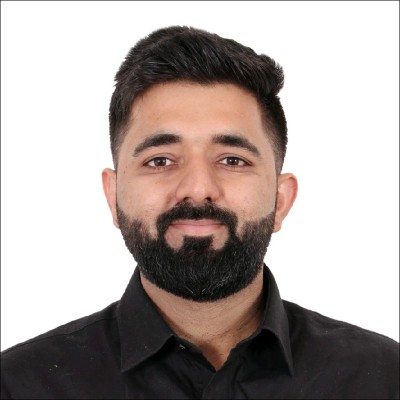
Siddhant Dhawan is currently a Senior Application Engineer at National Instruments (now part of Emerson) based in Bangalore, India. He specializes in Radio Frequency (RF) systems with experience spanning Aerospace and Defence, as well as advanced wireless technologies including 5G and emerging 6G research. He has previously worked at Tata Advanced Systems Limited on RADARs, satellites, and target simulators, and later at Rohde & Schwarz as an RF conformance engineer focusing on standards such as 4G, 5G, NB-NTN, and NR-NTN. In his current role, he collaborates with leading academic and research institutions across India, supporting wireless communication research through test and measurement solutions. He has engaged extensively with stakeholders in the telecom ecosystem, including semiconductor companies and conformance testing bodies. His research interest began during his undergraduate studies, culminating in a published paper titled "What to Expect from 5G Systems" in the IOSR Journal of Mobile Computing & Application in 2016.
Abstract: This tutorial presents the implementation and operational workflow of a real-time with Artificial Intelligence and Machine Learning (AI/ML) Neural Receiver based on the OpenAirInterface (OAI) software stack and the Universal Software Radio Peripheral (USRP) software-defined radio (SDR) hardware. This system provides an open platform to enable the research and prototyping of 5G/6G systems that leverage with AI/ML. This system utilizes entirely open-source software to facilitate comprehensive development, testing, and demonstration of 5G/6G research capabilities. The system architecture is modular and extensible, and can be modified and configured to investigate specific experiments and testing scenarios.


Sreekanth Sreedharan is Director of Wireless Software and Fibre channel Firmware at Marvell Technology. With nearly 20 years of industry experience in wireless communication and storage connectivity technologies, he leads engineering teams developing advanced software and firmware.
He holds a B.E. in Electronics and communication Engineering from Visvesvaraya Technological University(VTU) Ajit Mishra is a Senior Principal Engineer at Marvell Technology, where he works on Wireless Software and Fibre Channel Firmware. With nearly 20 years of industry experience, he has contributed to the development of advanced software and firmware solutions across wireless communication and storage connectivity technologies.
His technical expertise spans embedded systems, wireless communication protocols, high-performance storage networking, Fibre Channel, and firmware architecture, with a focus on building reliable, scalable, and high-performance systems.
Ajit holds a Bachelor of Engineering (B.E.) in Electronics and Communication Engineering from Biju Patnaik University of Technology (BPUT), Odisha. He has a strong interest in advanced communication systems, computer architecture, artificial intelligence, and emerging technologies, and is committed to continuous learning and innovation in these domains.
Abstract: Every major computing revolution—from the Internet and wireless communications to cloud computing and artificial intelligence—has been enabled by breakthroughs in communications and signal processing. As AI scales across billions of connected devices, networks, and data centers, the challenge is no longer compute alone; it is how efficiently intelligence can be communicated, moved, and acted upon. This keynote explores the evolution from Shannon’s information theory to the emerging era of connected intelligence, where wireless connectivity, intelligent networks, optical interconnects, and AI infrastructure are increasingly converging. From the wireless edge that connects people, devices, vehicles, and industries, to the AI cloud that powers large-scale intelligence, signal processing and communications remain the critical technologies enabling reliable, scalable, and energy-efficient systems. As the boundaries between communications, computing, and AI continue to blur, the next wave of innovation will be driven by intelligent infrastructure that seamlessly connects the physical and digital worlds. This talk will highlight the technological trends shaping this transformation and discuss opportunities for academia and industry to collaborate in defining the future of connectivity—from the wireless edge to the AI cloud.

Dr. Ashok Kumar Reddy Chavva received the B.Tech. degree in electronics and communications engineering from JNTU, Hyderabad, India, in 2003, and the M.E. and PhD degrees in Electrical Communication Engineering from the IISc, Bengaluru, in 2005 and 2025. From 2005 to 2013, he worked at Beceem Communications (later Broadcom), developing physical layer algorithms for early 4G WiMAX and LTE systems. Since 2013, he has been with Samsung R&D Institute, Bangalore, where he leads a team working on 6G technologies. His research interests include physical layer algorithms, 5G/6G systems, X-MIMO, millimetre-wave systems, and AI for communications. He has published over 65 papers, filed over 270 patents with over 100 grants. He received best paper awards at IEEE CCNC 2016 and IEEE World 5G Forum 2020, and won multiple ITU AI/ML 5G Challenges and awards.
Abstract: As 6G takes shape, AI is emerging as a design principle of the air interface. This talk presents recent results on AI for wireless systems, spanning PHY-layer receivers, channel estimation, CSI compression, generative channel modelling, and ISAC. We then take a candid look at the trade-offs facing the industry: complexity versus gains, generalization versus site-specific learning, and standardization versus proprietary innovation. We close with key takeaways and a roadmap toward a standardized, AI-native 6G.