SPCOM2026

Poster Preparation Instructions for Authors


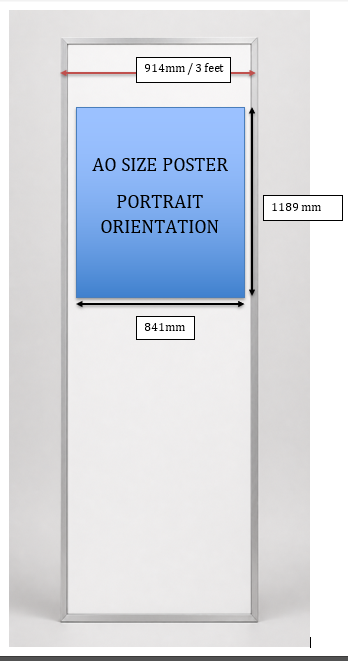
  1. Each poster will be displayed on a poster board that accommodates A0 portrait size; do not exceed 84 cm width and 118 cm height.
  2. Mounting materials (pins or tape) will be provided by the organizers at the venue; please do not use materials that may damage the boards.
  3. Each board will be labeled with a paper ID (same as on CMT); authors must display their poster only on the assigned board.
  4. Posters must be mounted at least 30 minutes before the start of the assigned poster session. Please remove your Poster immediately after the session to help the next presenter save time; posters left behind may be discarded.
  5. Suggested LaTeX A0 Portrait Style Poster Templates

    The following LaTeX-based poster templates and classes support A0 PORTRAIT (or easily configurable A0) academic posters suitable for SPCOM 2026. Authors may choose any of these resources, provided they comply with the SPCOM 2026 A0 portrait poster requirements.

    1. beamerposter / Gemini-style A0 templates

    2. A0 poster template repositories

    3. Overleaf and LaTeXTemplates poster galleries


    The mounting vertical panel is shown in the picture below.

    mount

    4. Author Attendance and Presentation

    • At least one registered author must be physically present at the poster during the scheduled core presentation time indicated in the SPCOM 2026 program.
    • The presenting author is expected to:
      • Provide a brief overview (1–3 minutes) of the work, and
      • Engage with attendees, answering technical questions.
    • Failure to present the poster during the scheduled time may be considered a no-show under conference policies, which may affect inclusion in the proceedings.

    5. Mandatory Poster Content

    The top section of the poster must contain:

    • Paper Title (matching the accepted SPCOM 2026 paper title).
    • Author Names and Affiliations, including city and country; clearly indicate the presenting author (e.g., with an asterisk).
    • A small line indicating:
      “Presented at SPCOM 2026, International Conference on Signal Processing and Communications, Department of Electrical Communication Engineering, Indian Institute of Science, Bengaluru, India, July 16–18, 2026.”
    • The paper ID and/or poster session code in a visible but unobtrusive location (e.g., a corner at the top or bottom).

    Recommended structure for the main body: [this is for guideline]

    • Introduction / Motivation / Problem Statement
    • Related Work / Background (brief)
    • System Model / Methodology / Proposed Approach
    • Experimental Setup / Simulation Environment
    • Results and Discussion (with clear figures and charts)
    • Conclusions and Key Takeaways
    • (Optional) Future Work and Selected References

    5. Layout, Fonts, and Readability

    • The poster must be readable from a distance of 1.5–2 meters.
    • Recommended minimum font sizes (for A0 portrait):
      • Title: 60–90 pt
      • Section Headings: 36–48 pt
      • Body Text: 24–32 pt
      • Figure/Table Captions and Labels: ≥ 20–24 pt
    • Use simple, legible fonts (such as Sans Serif or any equivalent font) with consistent styling across sections.
    • Prefer short paragraphs and bullet points over dense text blocks and maintain a clear column structure with sufficient white space to guide the reading flow.

    6. Figures, Graphics, and Color

    • Emphasize figures, diagrams, and charts as primary communication tools; text should support and explain these visuals.
    • Use high-resolution images and vector graphics where possible; ensure that axes, legends, and labels are clearly visible from 1.5–2 m.
    • Use consistent color schemes and ensure good contrast between text, figures, and background.
    • A light, plain background (e.g., white) with dark text is strongly recommended; avoid highly saturated or textured backgrounds that may reduce legibility.

    7. Language, Printing, and Optional Additions

    • All poster content must be in English.
    • Focus on conveying the key ideas, methodology, and main results, rather than reproducing the full paper.
    • Authors are responsible for arranging their own printing; SPCOM 2026 will not provide on-site poster printing.
    • Optional elements:
      • A QR code linking to the full paper, preprint, code, or supplementary material may be placed unobtrusively in a corner.
      • Business cards or small handouts may be used where practical.

    8. Final Checklist Before Arrival [guidance to Authors]

    Before traveling to SPCOM 2026 at the Indian Institute of Science located in Bengaluru, please verify that:

    • The poster is A0, portrait, printed on a single sheet, and physically ready to bring to the venue.
    • The title, authors, affiliations, conference name “SPCOM 2026”, venue, dates (July 16–18, 2026), and paper ID/session code are clearly shown.
    • Session Codes will be Released Shortly on the SPCOM Website via a separate email.
    • Fonts, figures, and labels are readable at distances of 1.5–2 meters.
    • The presenting author is registered and aware of the session time and paper ID.
    • The printed poster is safely packed for transport to the Indian Institute of Science.
    A PDF version of the guidelines can be found here.