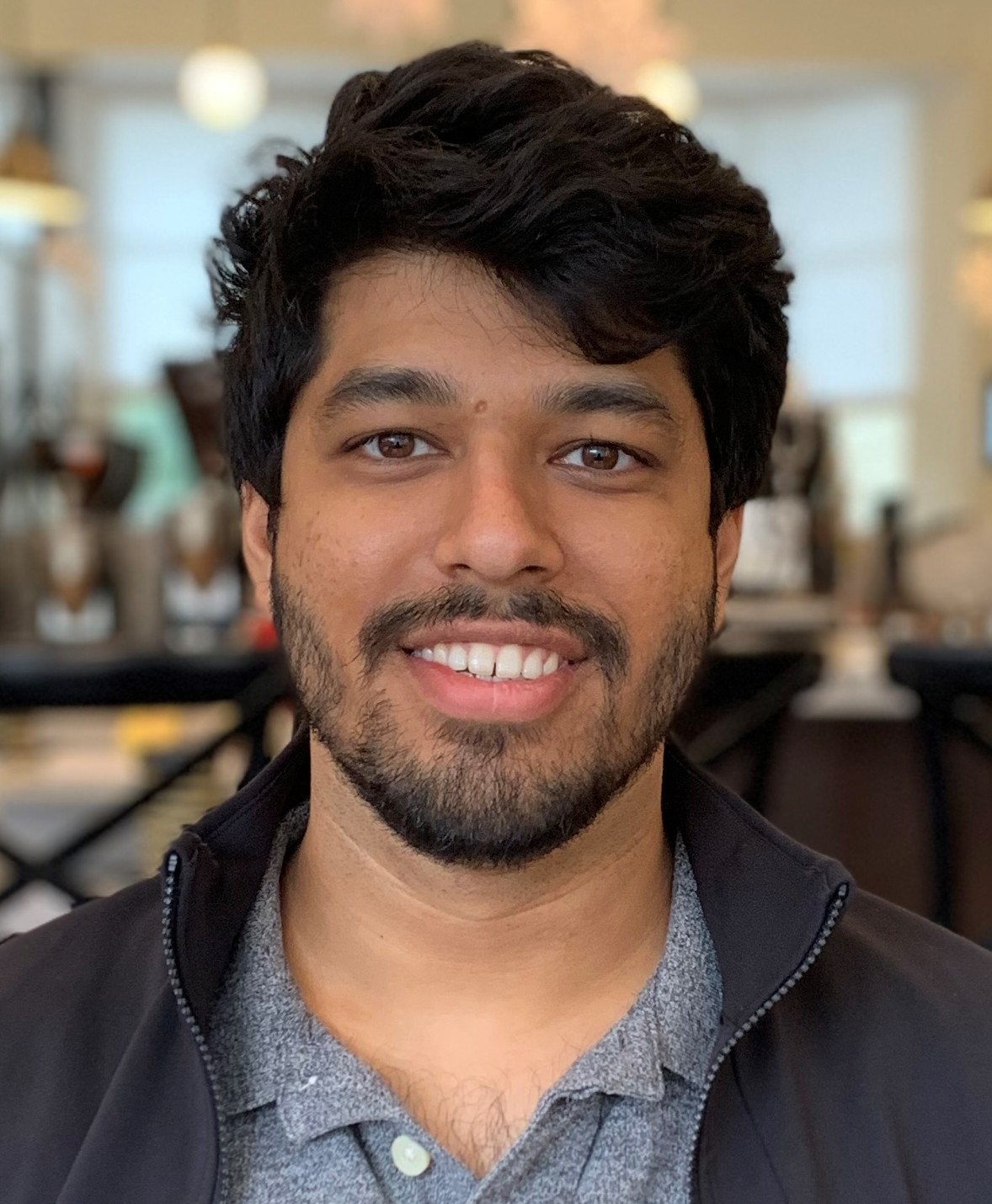
Parthe Pandit is the Thakur Family Chair Assistant Professor with the Center for Machine Intelligence and Data Science (C-MInDS) at IIT Bombay. He was a Simons Postdoctoral Fellow at UCSD, and obtained his PhD in ECE, MS in Statistics both from UCLA, and his undergraduate degrees from IIT Bombay. He is a recipient of the Schmidt Sciences AI2050 Early Career Fellowship (2024), and the Jack K Wolf ISIT student paper award (2019).
Abstract: Modern machine learning involves design choices about the architecture of the model, optimization procedures used for training, and amount of data. These choices interact in a complex manner. However, to build *good* ML systems, it is essential to understand their effect on the performance of the system. Through this tutorial, we will build a framework to analyze some of these design choices. We will focus on addressing issues arising out of the models being overparameterized and overfitted, which have challenged classical statistical learning theory based on uniform convergence and have demanded the development of a revised theory of statistical ML. While this is a fast growing area with many new tools introduced to pose and answer important questions, we will focus on some techniques based on spectral analysis of kernel methods, and nonlinear statistical inverse problems in high dimensions. We will conclude by outlining some important open questions in the field.
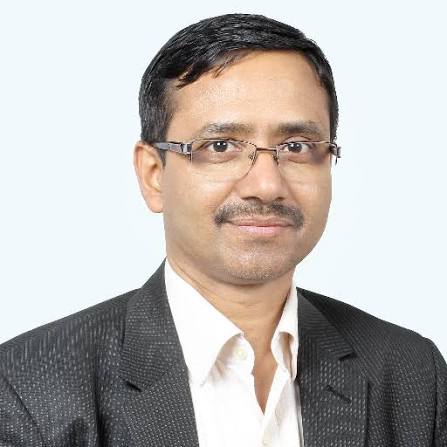
Subhas is a passionate, results-driven Telecommunications R&D leader with 34+ years of industry experience spanning 5G/6G systems, wireless access and transport networks, AI-enabled network automation, and standards development.Recognized as an Ex-Wipro Fellow, and Chief Architect for 5G, IEEE SA BoG member at large, and an IEEE Senior Member. He has been an inventor with 37 unique patent applications, with 15 patents granted. He has an extensive record of collaborative research, standards contributions, and mentoring of engineers, students, and first-time inventors.
As a Technology advisor, Subhas is currently performing the CTO role for IOS-MCN, an IISc anchored multi-institute collaborative open source 5G networking platform to enable indigenous ecosystems of academia, Startup and application developers.Subhas also is engaged with ArtPark as a consultant. Prior to joining IISc, Subhas led the 5G product R&D of HFCL as a Senior Vice President where he developed multiple 5G Radio and Transport products and also led the Standards and research initiative under the CTO charter. Prior to HFCL, he has served as a Wipro Fellow and the Chief Architect of 5G, to drive Wipro’s organization-wide 5G initiative across all industry verticals
He started his career at C-DOT as a research Engineer and developed the Remote Switching Unit of MAX-L class 5 switch, ground up. He holds an engineering degree in ECE from IIT Kharagpur.
Abstract: Captive Non-Public Networks (CNPNs) are emerging as a critical enabler for enterprises and verticals demanding secure, high‑performance connectivity tailored to their unique requirements. Leveraging 5G and paving the way toward 6G, CNPNs built on 3GPP specifications provide the foundation for diverse use cases spanning industrial automation, mission critical communications, and advanced digital services and workload for cyber-physical systems.
This tutorial will guide participants through the principles and practices of planning and designing a high‑performance CNPN. Key topics include:
By combining architectural insights with practical engineering considerations, the session will equip attendees with a structured approach to designing CNPNs that meet stringent performance demands while remaining aligned with evolving 3GPP and O‑RAN standards.
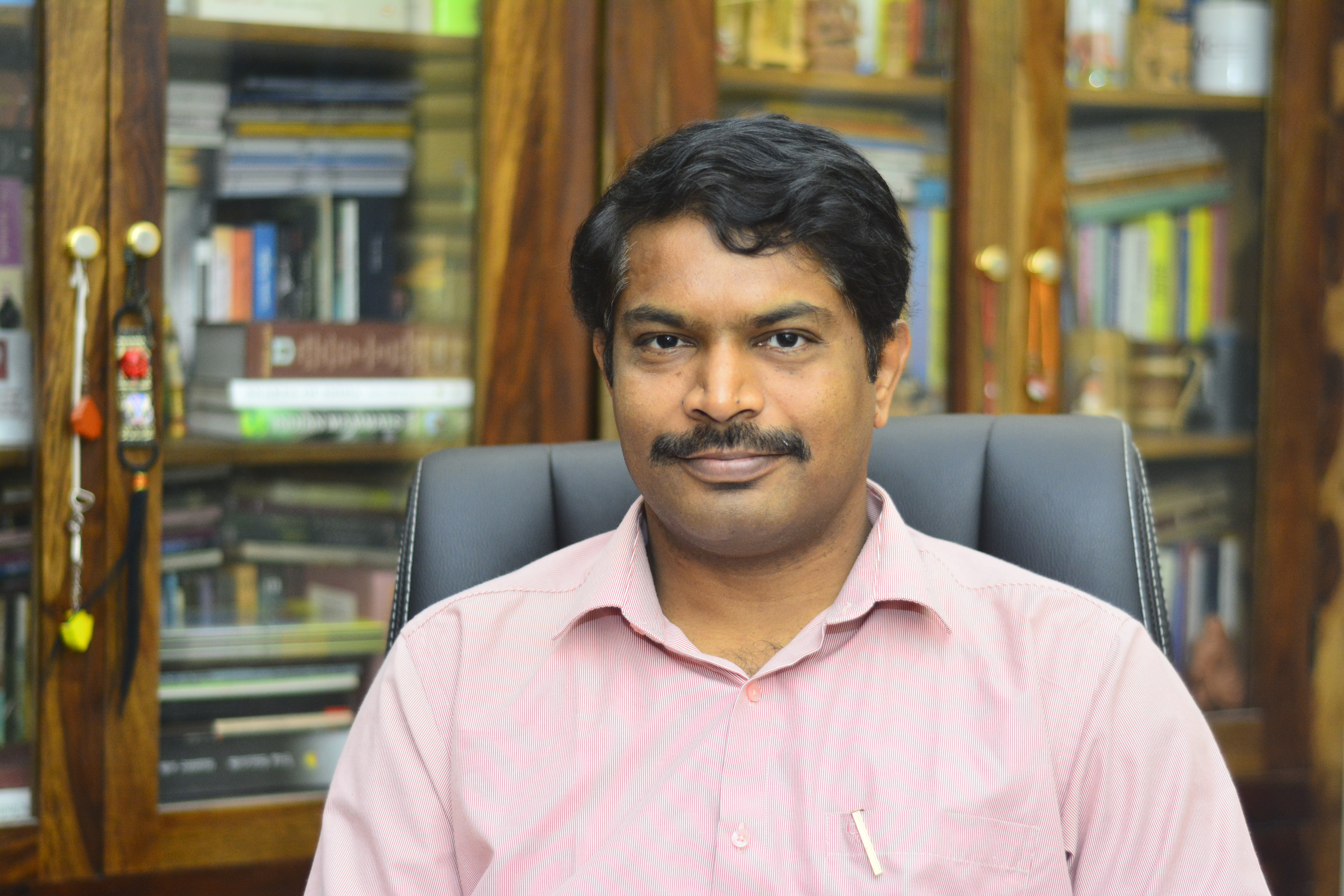
Prof. C. M. Chandrashekar is an Associate Professor at the Indian Institute of Science (IISc), Bengaluru. Previously, he served as a Professor at The Institute of Mathematical Sciences (IMSc), Chennai. After pursuing his advanced studies at the University of Oxford, UK, at the Institute for Quantum Computing and the Perimeter Institute, Waterloo, Canada, he received his PhD in 2009. His research focuses on quantum information processing and quantum computation, with particular emphasis on developing quantum algorithms for simulating natural quantum phenomena and engineering entangled photon states for scalable quantum computation. His work spans theoretical studies, experimental investigations, and the development of translational quantum technologies for quantum information processing applications. He is also the Lead Principal Investigator of the Technology Group on Photonic Quantum Computation under the National Quantum Mission. His achievements have been recognized through honours, including the Rhodes Scholarship, the DST Ramanujan Fellowship, the Satish Dhawan Visiting Chair Professorship, and election as a Member of the National Academy of Sciences, India (NASI).
Abstract: Quantum Information Science which lies at the heart of emerging quantum technologies is emerging as an inherently interdisciplinary field. This tutorial provides an introduction to the principles of quantum information processing by introducing the mathematical formalism of quantum states, quantum evolution, measurement, and quantum correlations. These concepts provide the foundation for understanding how quantum mechanics enables information-processing capabilities beyond those achievable with classical systems. We then present presents the circuit model of quantum computation together with illustrative examples of quantum algorithms, quantum walks, and quantum communication protocols. Particular emphasis is placed on photonic implementations of quantum information processing, highlighting how quantum interference, superposition, and entanglement can be harnessed for scalable quantum technologies. The tutorial also introduces emerging applications such as quantum random number generation, quantum key distribution, quantum authentication, the quantum one-time pad, and other quantum cryptographic primitives along with quantum sensing and computing advancements.
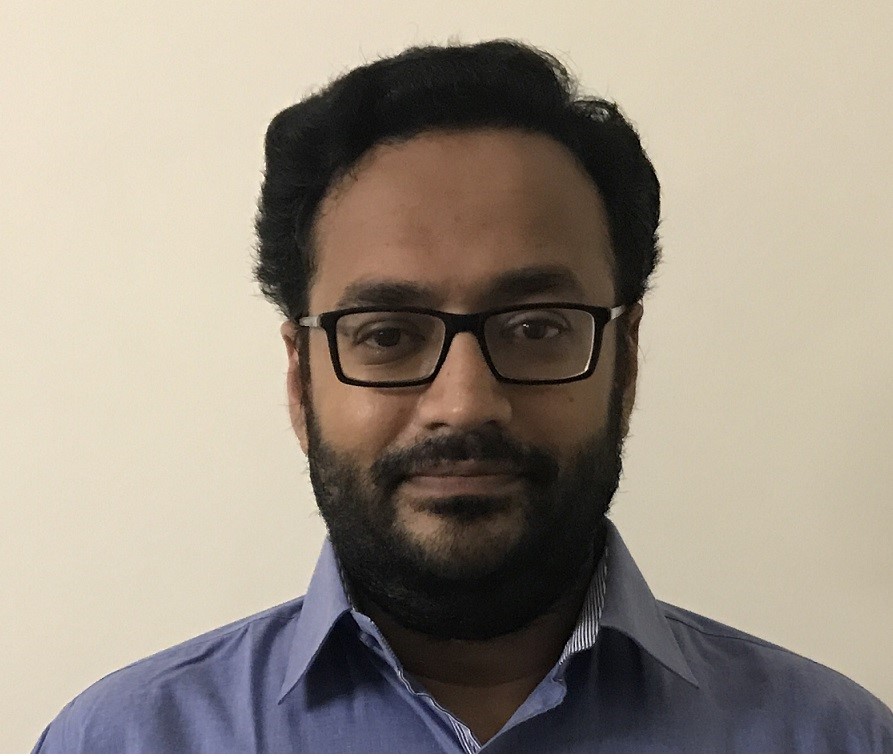
Saket Anand is an Associate Professor at IIIT-Delhi. He completed his PhD from Rutgers University in 2013. His research interests span geometric computer vision, semi-supervised and unsupervised learning, and robust statistical methods for computer vision. He has been applying computer vision techniques to domains like wildlife conservation and conflict management, road safety and autonomous driving, and remote sensing for agriculture. In addition to publishing and reviewing papers at venues like ECCV, CVPR, TPAMI, etc., he has served as an Area Chair for IEEE CVPR 2026, ICCV 2025, WACV 2020, 2023, 2024 and ICVGIP 2020/21, the premier Indian Vision Conference, and as a Program co-Chair for IEEE WACV 2022.
Lokender Tiwari is the Head of Computer Vision and AI at BotLab Dynamics, where he leads the development of next-generation intelligent drones for defense applications. He completed his PhD from IIIT-Delhi. His research interests include 3D vision and spatial AI, autonomous driving & flying, sensor fusion and signal intelligence, neural physics-based simulation, and differentiable graphics for physics-aware immersive technologies. He has been applying above techniques to build multi-modal systems for comprehensive situational awareness, autonomous navigation, real-time detection & tracking, generative simulations etc. His work has been published at top-tier conferences such as ECCV, CVPR, ICCV, ISMAR etc. He also serves as a reviewer and program committee member for conferences and journals like CVPR, ICLR, ICML, ECCV, AAAI, TPAMI, IJCV etc.
Abstract: Following the remarkable success of deep learning on visual recognition and related 2D vision tasks, there has been an increasing interest in developing deep learning models for 3D vision problems. In this tutorial, we will focus on multi-view geometry problems and study some of the traditional and modern, learning-based solutions. We will begin with a brief review of the fundamentals of image formation and camera geometry before formulating the related problems of 3D reconstruction, Structure from Motion (SfM) and Simultaneous Localization and Mapping (SLAM), followed by an overview of traditional computer vision solutions and their relevance today. We will then review some of the key ideas driving learning-based solutions and introduce some recently proposed models for 3D vision. We will conclude with practical considerations for tackling 3D vision problems today and some open research questions. The prerequisites for this tutorial are undergraduate linear algebra and a working knowledge of PyTorch and deep learning models (CNNs and Transformers).
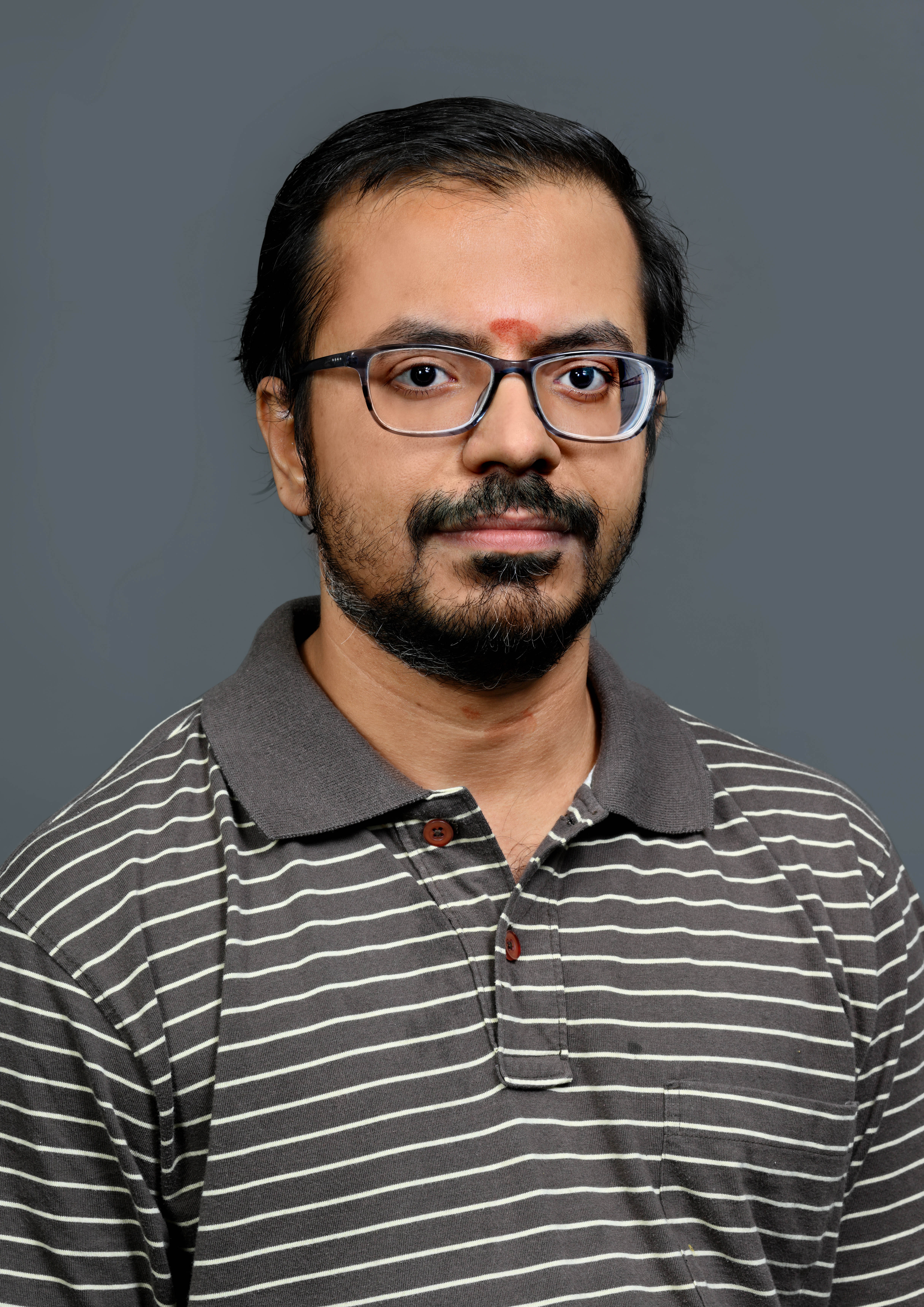
Prasad Krishnan is with the Signal Processing and Communications Research Centre, International Institute of Information Technology Hyderabad (IIIT Hyderabad) as a faculty member. He received the B.E. degree from the College of Engineering at Guindy, Anna University, in 2007, and the Ph.D. degree from the Department of Electrical Communication Engineering, Indian Institute of Science, Bangalore, in 2014. His research has been supported through generous grants from the Govt. of India (SERB/ANRF), as well as private agencies like Qualcomm. His current research interests include but is not limited to Algebraic Coding Theory, Private Information Retrieval, and Information-theoretic limits of DNA data storage.
Abstract: In Private Information Retrieval, a client seeks to download a desired file privately from a library stored in a distributed fashion across multiple databases (or servers). Characterisation of the capacity (i.e., the largest possible rate) of PIR under perfect information-theoretic privacy, for various typical distributed storage settings, has been the primary focus of the last decade in IT-PIR. This session will present results regarding some recent shades of IT-PIR, including PIR under relaxed notions of privacy, PIR under special storage schemes, with constraints on required file-sub-packetization, etc. These explorations lead to newer questions that are often simple to state, but perhaps not so simple to solve.