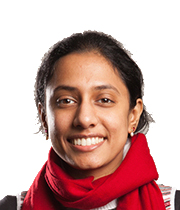
Shobha Sundar Ram did her Bachelor of Technology in ECE from the University of Madras, India, in 2004, Master of Science and Ph.D. in electrical engineering from the University of Texas at Austin, USA, in 2006 and 2009, respectively. She worked as a research and development electrical engineer at Baker Hughes Inc., USA, from 2009 to 2013. She joined Indraprastha Institute of Information Technology as an Assistant Professor in 2013, where she is currently a Professor in the Department of Electronics and Communications Engineering. She is primarily engaged in research and education, principally in the areas of radar systems and electromagnetic sensor design and modeling. She serves as an Associate
Editor for the IEEE Transactions on Aerospace and Electronics Systems, IEEE Transactions on Radar Systems, and is a Guest Editor for IEEE Transactions on Computational Imaging. She has served as a Guest Editor for IET Radar, Sonar, and Navigation and Topics Editor for Frontiers of Signal Processing. She currently serves as the Secretary of the IEEE Microwave Theory and Techniques Society (MTT-S). She is a Vice-Chair of the Young Professionals Standing Committee under the MTT-S Administrative Committee. She is a member of the following technical committees: the Radar System Panel of the IEEE Aerospace and Electronics Systems Society (AESS), the Microwave/mm-Wave Radar, Sensing and Array Systems Technical Committee -24 of MTT-S, and the Sensor Array and Multichannel (SAM) Technical Committee of the IEEE Signal Processing Society (SPS). She is also a member of the following working groups: the Integrated Sensing and Communications Working Groups of MTT-S and AESS, and the Synthetic Aperture Working Group of SPS. She has served in the Technical Program Committee of several international conferences and was the Technical Program Committee Co-Chair of the IEEE Microwave, Antennas, and Propagation Conference (MAPCON) in 2024. She has won several student paper awards for co-authored works in the USA, Europe, and India, and the Qualcomm Innovation Fellowship India award for 2022 and 2024.
Abstract: A key objective of next generation intelligent transportation services is to enable high data rate vehicular communications to enable sharing of road and environmental information for improved road safety. Existing sub-6GHz vehicular communication protocols do not support the large bandwidths required for high throughput and low latency communications. Millimeter wave (mmW) IEEE 802.11ad protocol with narrow high-directional beams has been proposed for supporting high bandwidth connected vehicles. The standard IEEE 802.11ad protocol enables beam alignment between the base station (BS) and mobile unit (MU) through a lengthy beam training procedure accomplished through additional packet overhead. However, this results in reduced latency and throughput
In this talk, I will present an integrated sensing and communications (ISAC) system solution where the communication protocol is embedded with auxiliary radar functionality to enable rapid beam alignment of communication beams without the requirement of channel overheads. Further, I will present a complete architectural framework of the 802.11ad-based ISAC system transceiver along with the signal processing algorithms and performance analysis on simulated target scenarios. Next, I will present the hardware prototype of the ISAC system comprising the three-dimensional efficient reconfigurable digital hardware radar signal processing architecture and communication system on multiprocessor system-on-chip; an mmWanalog front end integrated with the digital frontend; and over-the-air performance characterization in real radio environments.
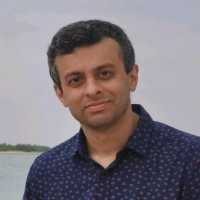
Raj Kumar received the B.E. degree from the University of Madras, the M.Sc.(Eng.) degree from the Indian Institute of Science, Bangalore, and the Ph.D. degree from the University of Southern California (USC), Los Angeles (specializing in coding and information theory). He was subsequently a post-doctoral researcher at the École Polytechnique Fédérale de Lausanne (EPFL, Switzerland) for a couple of years, and has been with Qualcomm’s Wireless R&D group in Bangalore since 2011. At Qualcomm, he has worked on a wide variety of projects spanning algorithm design, standardization and commercialization of 3G to 6G cellular systems, WiFi, WiGig (60GHz mmWave) and low earth orbit satellite communication systems, as well as advanced positioning and wireless sensing (ISAC) solutions.
Abstract: Wireless sensing is emerging as a key capability in next-generation networks, enabling a wide range of use cases such as device-free localization, activity monitoring, smart infrastructure, and digital twins. The talk will highlight the standards evolution from 5G-Advanced toward 6G ISAC as a native platform capability. It will also present real-world prototype results, demonstrating accurate sensing across various scenarios. These results illustrate the transition from research to deployable systems for future wireless networks.
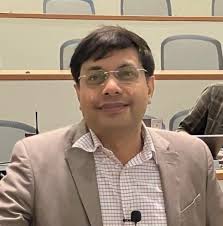
Kumar Vijay Mishra (S’08-M’15-SM’18) obtained a Ph.D. in electrical engineering and M.S. in mathematics from The University of Iowa in 2015, and M.S. in electrical engineering from Colorado State University in 2012, while working on NASA’s Global Precipitation Mission Ground Validation (GPM-GV) weather radars. He received his B. Tech. summa cum laude (Gold Medal, Honors) in electronics and communication engineering from the National Institute of Technology, Hamirpur (NITH), India in 2003. He is a Senior Fellow at the United States DEVCOM Army Research Laboratory; Research Scientist at the Institute for Systems Research, The University of Maryland, College Park under the ARL-ArtIAMAS program; 2026 BEL Endowed Visiting Chair Professor in Radar Systems at the Indian Institute of Science, Bangalore; Technical Adviser to Singapore-based automotive radar start-up Hertzwell; and honorary Research Fellow at SnT - Interdisciplinary Centre for Security, Reliability and Trust, University of Luxembourg. Previously, he had research appointments at the Electronics and Radar Development Establishment (LRDE), Defence Research and Development Organisation (DRDO) Bengaluru; IIHR - Hydroscience & Engineering, Iowa City, IA; Mitsubishi Electric Research Labs, Cambridge, MA; Qualcomm, San Jose; and Technion - Israel Institute of Technology.
Dr. Mishra has served as the Distinguished Lecturer (DL) of various societies: IEEE Communications Society (2023-2024), IEEE Aerospace and Electronic Systems Society (AESS) (2023-2024, 2025-2026), IEEE Vehicular Technology Society (2023-2025, 2025-2027), and IEEE Geoscience and Remote Sensing Society (2024-2025). He has been a Virtual DL of IEEE Future Networks Initiative (2022) and Traveling Lecturer of Optica (2025-). He is the recipient of the IEEE AESS Harry Rowe Mimno Award (2026), SAE International Award for Excellence in Innovation (2025), IEEE Signal Processing Society Pierre-Simon Laplace Early Career Technical Achievement Award (2024), Special Mention for the IEEE AESS M. Barry Carlton Award (2023), IET Premium Best Paper Prize (2021), IEEE T-AES Outstanding Editor (2021, 2023, 2024, 2025), U. S. National Academies Harry Diamond Distinguished Fellowship (2018-2021), American Geophysical Union Editors' Citation for Excellence (2019), Royal Meteorological Society Quarterly Journal Editor's Prize (2017), Viterbi Postdoctoral Fellowship (2015, 2016), Lady Davis Postdoctoral Fellowship (2017), DRDO LRDE Scientist of the Year Award (2006), NITH Director’s Gold Medal (2003), and NITH Best Student Award (2003). He has received Best Paper Awards at IEEE MLSP 2019 and IEEE ACES Symposium 2019.
Dr. Mishra is Chair (2023-2026) of the International Union of Radio Science (URSI) Commission C, Chair (2025-) of IEEE AESS Technical Working Group on Integrated Sensing and Communications (ISAC-TWG), and Vice-Chair (2021-present) of the IEEE Synthetic Aperture Standards Committee, which is the first SPS standards committee. He has been Chair (2023-2025) of the IEEE SPS Synthetic Apertures Technical Working Group. He has been an elected member of three technical committees of IEEE SPS: SPCOM, SAM, and ASPS, and IEEE AESS Radar Systems Panel. He is Editor-in-Chief (EiC) of River Rapids Series in Radar Systems, Signal Processing, Antennas and Electromagnetics (2025-), Editor (Deputy EiC) of Radio Science (2025-), Senior Area Editor of IEEE Transactions on Signal Processing (2024-), and Associate Editor of IEEE Transactions on Aerospace and Electronic Systems (2020-) and IEEE Transactions on Antennas and Propagation (2023-). He has been a lead/guest editor of several special issues in journals such as IEEE Signal Processing Magazine, IEEE Journal of Selected Topics in Signal Processing, IEEE Journal on Selected Areas in Communications, and IEEE Journal of Selected Topics in Applied Earth Observations and Remote Sensing. He is the lead co-editor of several books on signal processing and radar: Signal Processing for Joint Radar-Communications (Wiley-IEEE Press, 2024), Next-Generation Cognitive Radar Systems (IET Press Electromagnetics and Radar Series, 2023), Advances in Weather Radar Volumes 1, 2 & 3 (IET Press Electromagnetics and Radar Series, 2023), and Handbook of Statistics 54: Multidimensional Signal Processing (Elsevier). His research interests include radar systems, signal processing, remote sensing, and electromagnetics.
Abstract: Electromagnetic waves are characterized by their amplitude, frequency, and state of polarization -- also referred to as spin angular momentum (SAM), associated with circular polarization and recognized for over two centuries. In contrast, over the past three decades, growing attention has been directed toward orbital angular momentum (OAM), which arises from helical (twisted) phase fronts and provides an additional degree of freedom through its orthogonal modal structure. In this talk, we explore the use of OAM for integrated sensing and communications (ISAC), with the goal of enhancing spectral efficiency and spatial resolution in automotive scenarios. Unlike conventional uniform circular array (UCA)-based implementations, our approach employs a uniform linear array (ULA) with traveling-wave antennas to synthesize multiple Laguerre-Gaussian vortex beams. The proposed system embeds communication data within radar waveforms while enabling joint estimation of target position and velocity using radar-only frames. An OAM-based mode-division multiplexing strategy is used to separate sensing and communication functionalities, ensuring reliable parameter recovery. We conclude with perspectives on the future of ISAC systems. [Joint work with Wanghan Lv]
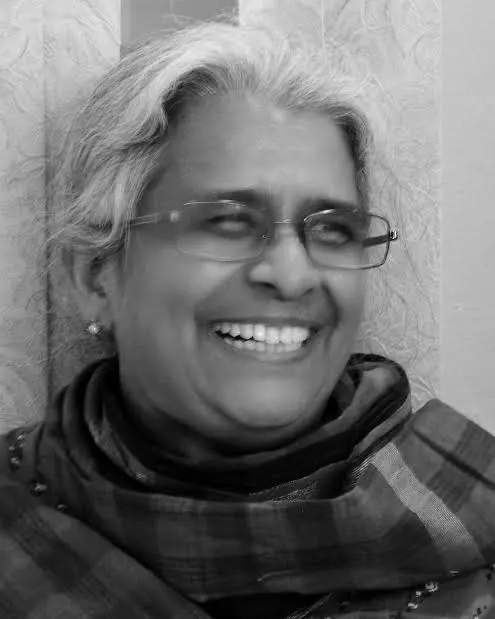
Hema A. Murthy retired as Professor at IITM in 2023 and was emeritus professor until 2026 at IITM. Currently she is a Distinguished Professor at SNU. Her research spans a broad range of areas in speech, music, and machine learning. Her primary research interests include speech processing, speech synthesis, music information retrieval, music processing, computational brain research, and other interdisciplinary domains involving machine learning and signal processing.
She received her Ph.D. in Computer Science and Engineering from the Indian Institute of Technology Madras in 1992 and M.Eng. in Electrical and Computer Engineering from McMaster University, Canada, in 1986, and her B.E. in Electronics and Communication Engineering from Osmania University in 1980.
Abstract: India holds the proud position of a subcontinent with a population of ~1.5 billion, and is home to 1369 languages (Census 2011) written in anywhere between 25-66 scripts. Bhashini 1.0 was quite a successful mission in that it gave momentum for the development of technologies in Indian languages. With this ambitious initiative came a number of challenges, especially in the development of speech to speech translation systems. As a proof of concept, systems were developed and are deployed on the national portal Bhashini. While it was expected that a number of startups will take up this technology, and proliferate applications across country, this has not obtained much traction primarily owing to the requirement of GPU and cloud infrastructure, the lack of connectivity in the bowels of the country and vision in terms of applications of relevance. Our experiences clearly showed that while technologies were developed for the last mile, adoption at the last mile seems more or less absent. Most applications are primarily for government departments in agriculture, welfare and so on. The focus of Bhashini 2.0 should be a decentralisation of the technologies developed. Further, these technologies must be made 'small footprint' so that an yesteryear cable TV operator can build a relevant application for his/her area. In India every 10-20 Km one will come across a different dialect, a new language. Small footprint systems (that run on CPUs at 40 degree temperature) that can be easily customised by a local entrepreneur is the need of the hour. Clever engineering that does not require GPUs for training or testing at speed is required. India needs to have its own LIGHT AI stack, instead of piggybacking on gas guzzling recipes built for English and other European languages. Europe has a similar population, and everyone in each country studies in their mother tongue. Unfortunately in India today, there is a mushrooming of English medium schools, and even rural children seek them out. Owing to the lack of English spoken at home, children end up learning by rote, without understanding the content. While the GER is 100%, there is quite a high dropout at high school level, and UG levels. Personalising education with Agentic AI could become a good enabler. Children continue to learn in the vernacular, have access to lessons taught by the best teachers in the world, and learn English alongside to be able to reach out to the world. Similar systems must be available in the healthcare, history, language preservation for posterity, etc. A federal structure of Bhashini will indeed go a long way in not only making the technology relevant, and could lead India to a future which reduces the divide between the 'haves' and 'have nots'.
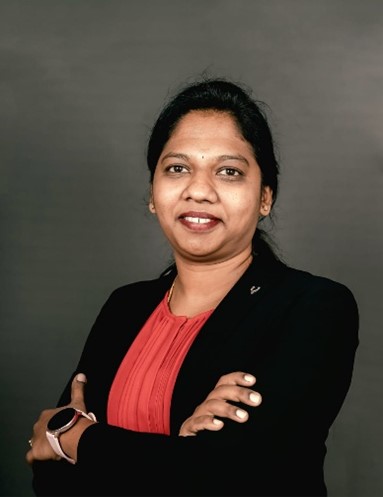
Kruthika KR Dr. Kruthika KR is a Founding Researcher at SandLogic, where she works on building foundational AI models for speech and language applications. She is a co-author of Shakti LLM, a family of efficient large language models designed for enterprise and edge deployment. Her work focuses on speech AI, large language model architecture, and scalable deployment of AI systems across cloud and on-device environments. She specializes in developing production-ready AI models powering voice agents, enterprise copilots, and real-time AI applications.
Abstract: We propose a robust and computationally efficient architecture for Indic conversational automatic speech recognition (ASR), designed for real-world multi-accent, noisy, and spontaneous speech scenarios commonly observed in customer-agent calls and voice applications. Our work combines large-scale Hindi speech curation from ARTPARK–IISc Project Vaani with attention-free state-space sequence modeling to improve robustness, scalability, and deployment efficiency. We first curate a high-quality multi-accent Hindi subset (~366 hours) from the Vaani corpus through language filtering, transcript validation, normalization, and conversational data selection. Using this corpus, we fine-tune a Whisper-based streaming low-latency speech-to-text (SL-STT) baseline to better handle noisy and accent-diverse conversational speech. The resulting system achieves a ~21% relative reduction in WER on the LAHAJA benchmark and 50–55% relative gains on production-like customer-agent call datasets, highlighting strong generalization under realistic deployment conditions. Building on this baseline, we introduce a BiMamba-ASR architecture for Hindi speech recognition as an efficient alternative to transformer-based attention mechanisms. The proposed model consists of a convolutional acoustic encoder, followed by bidirectional Mamba residual blocks that capture long-range temporal dependencies with linear-time complexity, and a unidirectional Mamba decoder enabling constant-time token generation during inference. This design provides significant advantages in memory efficiency, long-context scalability, and streaming suitability, making it well aligned with edge and low-latency deployment requirements. A key architectural contribution is a Mamba-based cross-modal fusion module that replaces conventional cross-attention for audio-text interaction. The module incorporates learnable temporal alignment, adaptive fusion of global and local acoustic context, and gated linguistic conditioning, enabling effective integration of acoustic and textual representations while preserving computational efficiency. This attention-free fusion mechanism forms the central novelty of the proposed architecture. We further validate the robustness of the system on a real-world Hindi benchmark (~5 hours, 227 samples) curated from diverse YouTube sources containing varied accents, speaking styles, and noisy acoustic environments. The proposed SL-STT system achieves a WER of 16.5%, approaching commercial systems such as Deepgram Nova-2 (13.8%), demonstrating strong real-world performance. Beyond ASR, the same efficient design principles are extended to lightweight Indic TTS systems Model for languages such as Bhojpuri, Marathi, and Bengali using the Syspin dataset, showing the broader applicability of scalable speech architectures across Indic voice technologies. Overall, our work demonstrates that large-scale curated Indic datasets combined with efficient BiMamba-based attention-free architectures offer a practical and scalable path toward production-grade speech systems for real-world multilingual deployment.
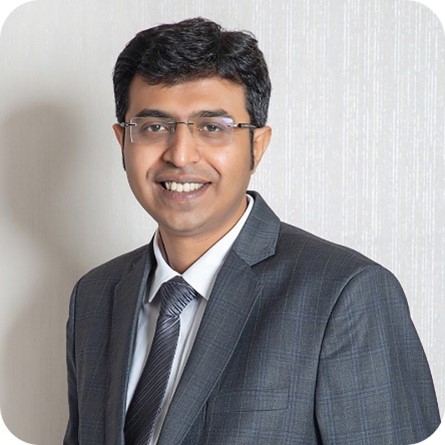
Sourav Bandyopadhyay is the Co-founder and Chief Scientist of Shunyalabs Research Private Limited and a PhD Scholar at IIT Kharagpur, working at the intersection of artificial intelligence, language, and fundamental theory. With an exceptional track record that includes 12 patents, 18 research publications, and 23 world records, his work challenges conventional thinking in AI, most notably his assertion that large language models are inherently prone to hallucination, grounded in Gödel’s Incompleteness Theorem. Driven by a deep obsession with correctness and intellectual rigor, Sourav brings a rare blend of theoretical insight and real-world application. Beyond research, he is also an active political strategist, applying analytical thinking to complex societal systems. His work consistently pushes the boundaries of what reliable, trustworthy AI can and should be.
Abstract: No standardized annotation format exists for stuttered speech, preventing data pooling across datasets and limiting ASR improvement for the roughly 80 million people worldwide who stutter. Existing datasets (SEP-28k, FluencyBank, UCLASS, KSoF) use incompatible schemes with no shared severity model and no schema validation. We present SAML (Stuttering Annotation Markup Language), a transcript-level annotation system comprising a formal XML Schema (XSD) extending W3C SSML with 12 element types, a shorthand notation that reduces annotation effort by about 80%, and a reference Python converter with schema validation. The severity scale is aligned with the SSI-4 clinical instrument. We show that SAML covers the union of annotation features across all four datasets while adding percent severity, typed blocks, and machine-checkable constraints. All artifacts are released under the W3C Software and Document License.
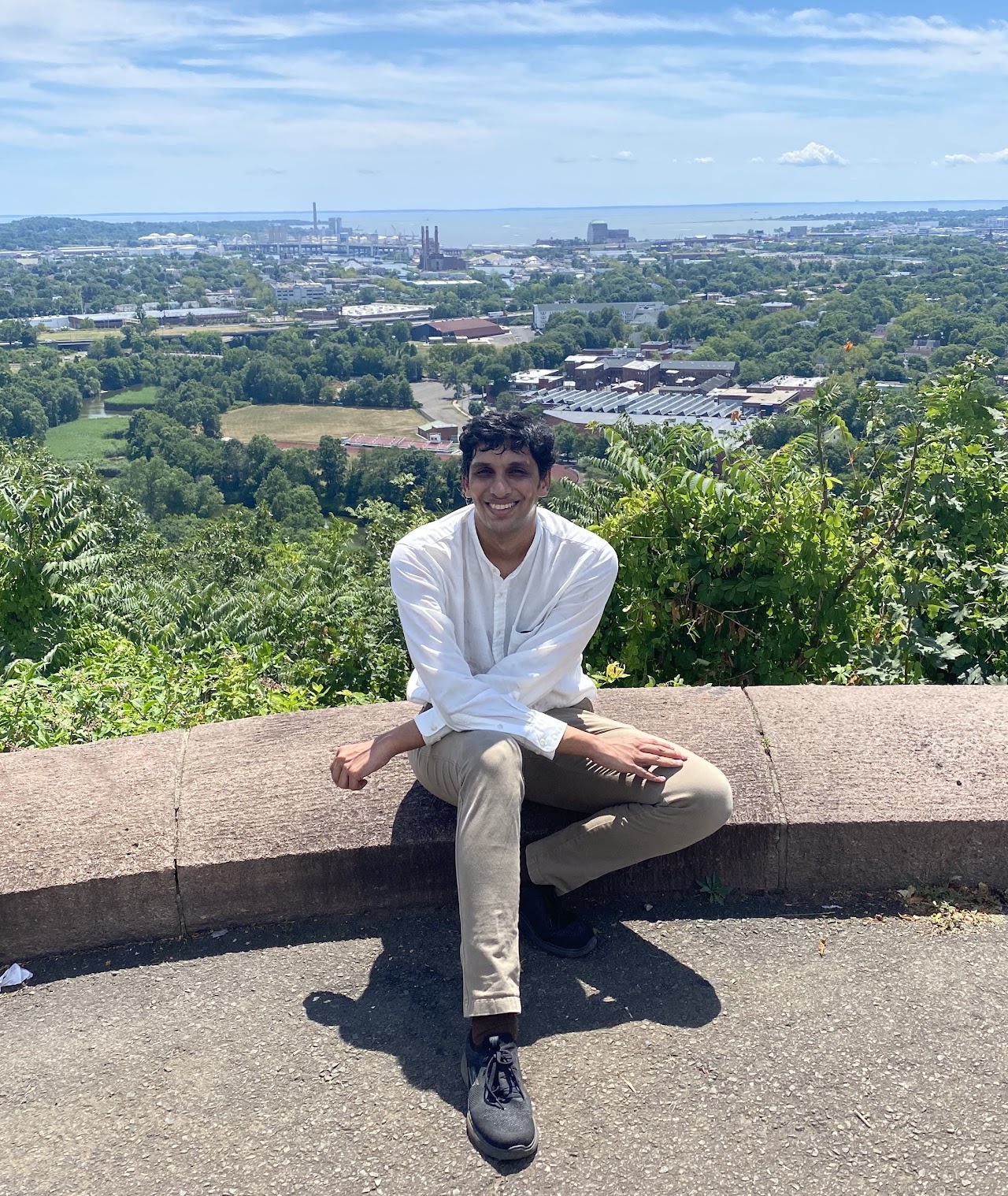
Anand Deo is an Assistant Professor with the Decision Science at the Indian Institute of Management Bangalore. His research focuses on reliable decision making in the presence of extreme, high-impact events. Specific areas of interest include modelling and simulation of distribution tails, chance constrained optimisation, distributionally robust problems and quantitative finance. His work has appeared in leading journals and conferences in Operations Research, Financial Engineering and Control Theory. He won the 2024 I-SIM Best Publication award for his work on rare event simulation.
Abstract: Chance-constrained optimization is a suitable modeling framework for safety-critical applications where violating constraints is nearly unacceptable. The scenario approach is a popular solution method for these problems, due to its straightforward implementation and ability to preserve problem structure. However, in the rare-event regime where constraint violations must be kept extremely unlikely, the scenario approach becomes computationally infeasible due to the excessively large sample sizes it demands. We address this limitation with a new yet straightforward decision-scaling method that relies exclusively on original data samples and a single scalar hyperparameter that scales the constraints in a way amenable to standard solvers. Our method leverages large deviation principles under mild nonparametric assumptions satisfied by commonly used distribution families in practice. For a broad class of problems satisfying certain practically verifiable structural assumptions, the method achieves a polynomial reduction in sample size requirements compared to the classical scenario approach, while also guaranteeing asymptotic feasibility in the rare-event regime. Numerical experiments spanning engineering applications show that our decision-scaling method significantly expands the scope of problems solvable both efficiently and reliably.
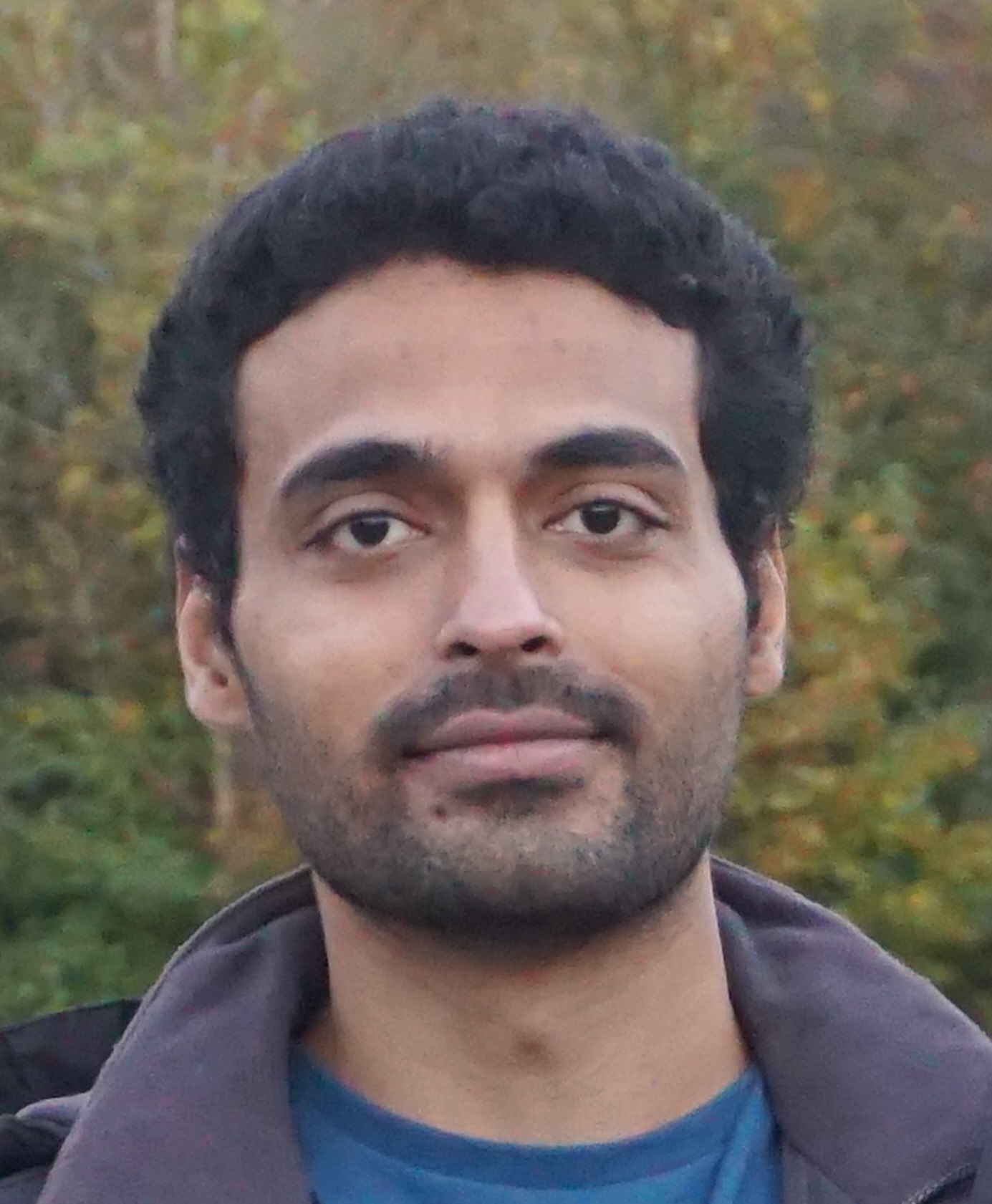
Pranay Sharma is an Assistant Professor at IIT Bombay in the Centre for Machine Intelligence and Data Science (C-MInDS). Till January 2025, he was a Research Scientist in the Department of Electrical and Computer Engineering at Carnegie Mellon University. In August 2021, he finished his PhD in Electrical Engineering and Computer Science at Syracuse University. Before that, he finished his B.Tech-M.Tech dual-degree in Electrical Engineering from IIT Kanpur. His research interests include federated and collaborative learning, stochastic optimization, reinforcement learning, and differential privacy.
Abstract:
Online federated learning (OFL) enables decentralized, private decision-making over continuous data streams. However, standard OFL adversary models often preclude parallelization benefits and fail to adequately capture diverse statistical variations. To address this, we integrate a stochastically extended adversary (SEA) in OFL, where the loss function remains fixed, but the adversary dynamically and independently selects each client's data distribution at each time step.
We propose the FedSEA algorithm, utilizing online stochastic gradient descent at clients with periodic global server aggregation. We establish global network regret bounds over time horizon T: O(√T) for smooth, convex losses and O(log T) for smooth, strongly convex losses. By quantifying the individual impact of spatial and temporal data heterogeneity on these bounds, we identify a regime of mild temporal variation where network regret improves with parallelization, thereby improving upon the pessimistic worst-case results in standard OFL.
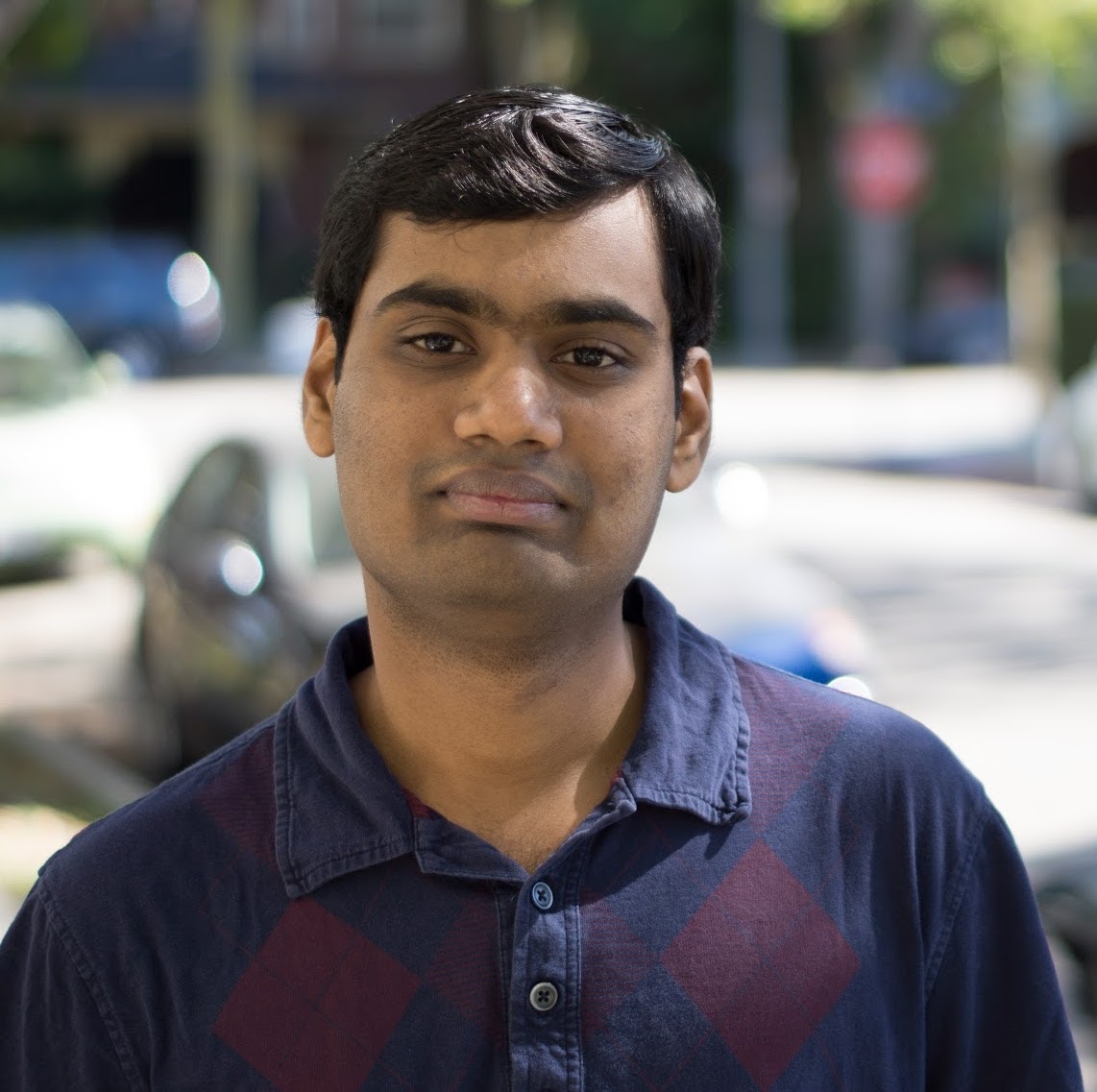
Dr. Karthikeyan Shanmugam is currently a Research Scientist at Google DeepMind India (Bengaluru) in the Machine Learning and Optimization Team since April 2022. Previously, he was a Research Staff Member and a Herman Goldstine Postdoctoral Fellow at IBM Research, NY in the period 2016-2022. He obtained his Ph.D. from UT Austin in 2016, B. Tech and M. Tech Degrees from IIT Madras in 2010, all in Electrical Engineering. He is a recipient of the IBM Corporate Technical Award in 2021 for his work on Trustworthy AI. His recent research focus in Machine Learning is on Causal inference, Online learning and Foundation models.
Abstract:
KL regularized reward optimization in the policy space is the mainstay of aligning generative models, specifically LLMs, to rewards. In the LLM case, the likelihood of producing a rollout is available that enables gradient-based RL algorithms. However, Diffusion models do not provide the marginal likelihood of the final denoised sample they generate. Some existing techniques impose KL regularization on the entire trajectory which suffer from quality issues. In this talk, we first show a general equivalence between the reward-reshaped, KL-regularized RL framework and a general class of acceptance-rejection sampling-based fine-tuning methods leading to a method called GRAFT . We further, exploit properties to motivate aligning policy on rewards only on higher noise scales when the number of samples is limited in RL training leading to a method called PGRAFT. PGRAFT effectively exploits a bias variance tradeoff in fine tuning diffusion models. We also introduce a variant for Flow models that corrects only the initial noise distribution to align with the rewards.
This is based on joint work with Dheeraj Nagaraj, Nitish Kannen, Gautham Govind Anil and Shaan Ul Haque: https://arxiv.org/abs/2510.02692
(accepted at ICLR 2026).
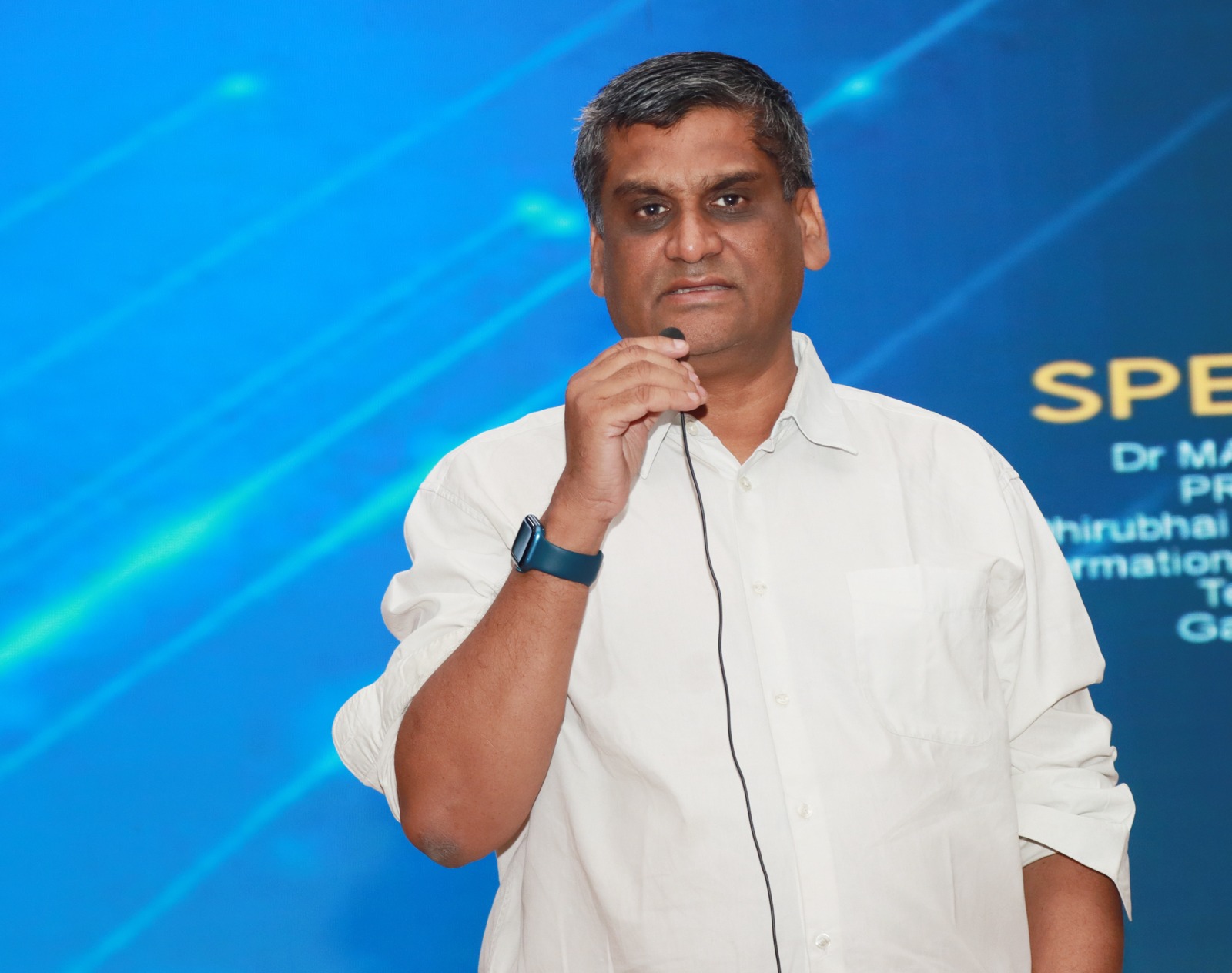
Manish K. Gupta received his Ph.D. in Mathematics from the Indian Institute of Technology, Kanpur, India, in 2000. Over his distinguished academic career, he has held academic positions at several prestigious institutions worldwide, including the University of Canterbury, New Zealand (2000-2002); National University of Singapore (2001); Arizona State University, USA (2002-2004); The Ohio State University, USA (2004-2005); Queen's University, Canada (2005-2006); Fraunhofer Institute for Cell Therapy and Immunology (IZI) in Germany (2019) and King Abdulaziz University, Saudi Arabia (2019). He has spent a significant tenure at the Dhirubhai Ambani Institute of Information and Communication Technology (DA-IICT) from 2006 to 2024. From August 2024, Dr. Gupta serves as the Director of Academics and a Senior Professor at Kaushalya: The Skill University (KSU), Government of Gujarat. A senior member of IEEE and an active member of the IEEE Computer Society, he has received an IEEE Computer Society Distinguished Visitor Award 2022. Dr. Gupta has made significant contributions to the Indo-American Education Society, Education USA serving as a board member from 2008 to 2015. Dr. Gupta is also a founder of the DA-IICT Centre for Entrepreneurship and Incubation (DCEI), a section 8 not-for-profit company, since 2006 and served as the chairman of the DCEI executive council from July 2016 to March 2019. His expertise is frequently sought by government committees on start-ups and innovations. He has served as Scientific Expert and Evaluator for research funding agencies such as the European Science Foundation (ESF), Dutch Research Council, Swiss National Science Foundation, Council of Scientific and Industrial Research, India, and the British Academy/Royal Society, contributing to expert peer review and evaluation of competitive research proposals across disciplines. Recognized for his contributions to the field, Dr. Gupta was selected as a featured reviewer in the February 2016 issue of ACM Computing Reviews. He is actively involved in setting standards in DNA data storage through the Storage Networking Industry Association (SNIA), USA, where he chairs the DNA Data Storage CODEC Working Group, and contributes to the JPEG DNA standards of the ISO/IEC JTC1/SC29/WG1 Committee. He is a principal member of the national committee on coding and processing of Audio, Picture, Multimedia and Hypermedia Information (LITD23), Electronic and Information Technology Department, Bureau of Indian Standards since February 2023. He has also been serving on the editorial boards of the Journal of Applied Mathematics and Computation, Springer and AIMS Electronics and Electrical Engineering, AIMS Press since 2017. He is the lead editor of the Springer book DNA Data Storage: Current Approaches and Emerging Trends (2026), one of the first comprehensive volumes in this rapidly evolving field. His areas of interest are the elegant applications of mathematics in emerging technologies: DNA digital data storage, DNA computing, AI, chemical computing, coding theory, quantum computing, quantum machine learning, quantum error correction, cryptography, blockchain, quantum algorithms, synthetic biology, DNA nanotechnology, bioinformatics. His Erdős number is 2.
His group https://www.guptalab.org is well known for developing open-source software products (for example, DNA Pen, 3DNA, DNA Cloud) in DNA nanotechnology. His DNA storage project was shortlisted as one of the top 5 innovations for the Prime Minister (India and Israel) demo at the India-Israel Innovation Initiative in January 2018. His LinkedIn is at https://www.linkedin.com/in/mankg/.
Abstract: Storage has been a fundamental need for every life on the planet. For example, Ants store food and Humans store data. Life has chosen DNA to store the blueprint of life. Storage is also a basic computing primitive. Unless you store the data you cannot process it. The representation of information can give you a different format for data storage. Humans are storing data from a very ancient time. Modern Humans are generating data every day from digital media such as cameras, Internet, phone, sensors and there is a pressing need for a technology that can store this data in the dense storage medium. It is predicted that soon the data generated will be in the order of Geopbytes (10²¹ bytes) from the Internet of Things. At present to store such big data we need large space and also it is very costly. Synthetic DNA storage seems to be the right technology emerging on the horizon. In 2013, Scientists showed how to store data on synthetic DNA with storage capacity of 2.2 petabytes on one gram of DNA. One can store 455 exabytes of data in one gram of DNA. Since the first kilobyte-scale demonstrations in 2012–2013, the field has advanced to petabyte-scale proofs of concept, dedicated DNA-storage codecs, and active international standardization through the SNIA DNA Data Storage Alliance and the JPEG DNA working group of ISO/IEC JTC1/SC29/WG1. This talk surveys the current landscape of DNA data storage from a coding and communications perspective. We describe the end-to-end pipeline — encoding, synthesis, storage, sequencing, and decoding — and the channel impairments (substitution, insertion, deletion, and strand loss) that distinguish DNA from classical storage channels. We review progress in constrained codes, error-correcting codes, and codec design, drawing on our group's contributions. The talk concludes with open problems and emerging directions at the intersection of coding theory, synthetic biology, and sustainable computing, drawing on themes from the forthcoming Springer volume DNA Data Storage: Current Approaches and Emerging Trends (2026), of which the speaker is the lead editor.
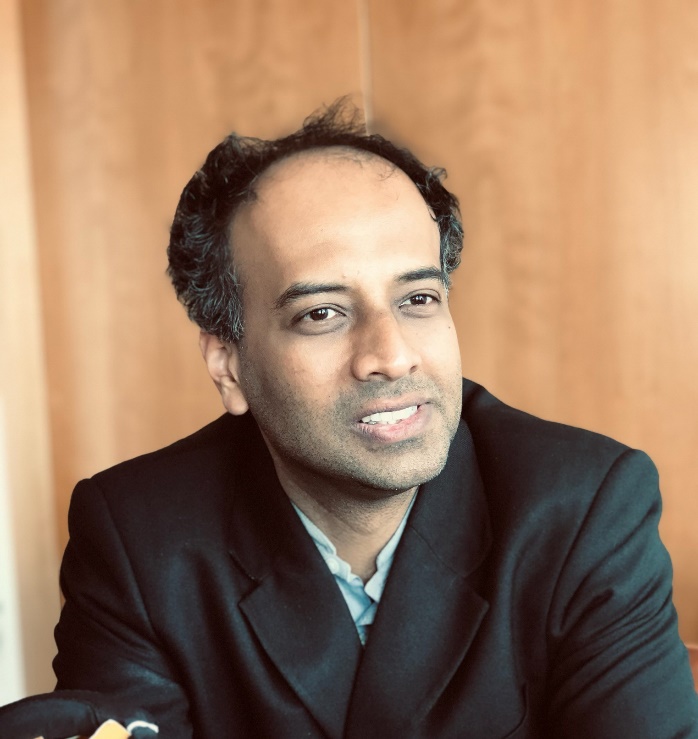
Krishna Jagannathan obtained his B. Tech. in Electrical Engineering from IIT Madras in 2004, and the S.M. and Ph.D. degrees in Electrical Engineering and Computer Science from the Massachusetts Institute of Technology (MIT) in 2006 and 2010 respectively. During 2010-2011, he was a visiting post-doctoral scholar in Computing and Mathematical Sciences at Caltech, and an off-campus post-doctoral fellow at MIT. Since November 2011, he has been with the Department of Electrical Engineering, IIT Madras, where he is currently a professor. His research interests lie in the stochastic modeling and analysis of communication networks, information theory, and queuing theory.
Abstract: We address the problem of detecting entanglement in an unknown bipartite qubit state. Using techniques from bandit theory and SDP duality, we propose a method that detects entanglement with a specified degree of confidence and, if entangled, produces an explicit ‘witness’ to certify it. We describe a two-stage pipeline: The initial ‘rapid screening’ phase implements a thresholding bandit routine that measures the bases of a fixed witness family (Zhu et al., 2010) to detect separability violations. If the screening phase is inconclusive, the policy advances to a state reconstruction phase governed by spectral optimisation. Finally, the state estimate is fed into an SDP-based certification layer that either confirms separability or produces a valid entanglement witness.
Venkat Padmanabhan is the managing director of Microsoft Research India (MSR India) in Bengaluru. He has been at the MSR India Lab since 2007, and was previously with Microsoft Research Redmond, USA for nearly 9 years. Venkat’s research interests are broadly in networked and mobile computing systems, and his work over the years has led to highly cited papers and paper awards, technology transfers within Microsoft, and industry impact. He has received several awards and recognitions, including the Shanti Swarup Bhatnagar Prize in 2016, four test-of-time paper awards from ACM SIGMOBILE, ACM SIGMM, and ACM SenSys, and several best paper awards. He was also among those recognized with the ACM SIGCOMM Networking Systems Award 2020 for contributions to the ns family of network simulators.
Venkat holds a B.Tech. from IIT Delhi (from where he received the Distinguished Alumnus award in 2018) and an M.S. and a Ph.D. from UC Berkeley, all in Computer Science. He has been elected a Fellow of the INAE, the IEEE, and the ACM. Venkat is also an adjunct professor at the Indian Institute of Science and was previously an affiliate faculty member at the University of Washington.
Abstract: In the traditional view, network communication terminates at a machine endpoint such as the user’s device. However, the ultimate goal of communication is to reach a human, so we focus specifically on the human-machine first/last hop and ask how AI can help us reimagine this. We consider several facets including proactive operation (before the user makes a request), implicit context (what’s on the user's mind), and state of knowledge (what’s in the user’s mind) that each have a bearing on human-machine communication, and explore these in action in the context of a range of experiences including web browsing, video viewing, and software development. I will conclude with some thoughts on why focusing on the human-machine first/last hop offers a rich array of research opportunities in such a world where the traditional machine-to-machine “net works”.