Abstract: This talk introduces analog computing as an emerging paradigm for signal processing and wireless communications, addressing the limitations of conventional digital architectures in terms of energy efficiency, latency, and scalability. It explores how computations can be performed directly in the electromagnetic domain at microwave frequencies, leveraging the interactions of signals for extremely fast and parallel processing.
The talk covers analog computers that linearly process microwave signals, named microwave linear analog computers (MiLACs), and their applications in signal processing and communications. We first demonstrate that a MiLAC can efficiently compute the linear minimum mean square error (LMMSE) estimator and matrix inversion, with remarkably low computational complexity. Specifically, a matrix can be inverted with complexity growing with the square of its size.
Applications in next-generation wireless communications are also discussed, showcasing how MiLAC enables gigantic MIMO beamforming entirely in the analog domain. MiLAC-aided beamforming minimizes the number of radio-frequency (RF) chains and relies only on low-resolution analog-to-digital converters (ADCs) and digital-to-analog converters (DACs). In addition, it eliminates per-symbol digital operations and remarkably reduces the computational complexity of zero-forcing (ZF), which scales quadratically with the number of antennas instead of cubically.
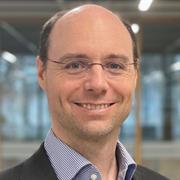
Bio: Prof. Bruno Clerckx is Professor of Wireless Communications and Signal Processing, the Head of the Communications and Signal Processing Group, and the Head of the Wireless Communications and Signal Processing Lab, within the Electrical and Electronic Engineering Department, Imperial College London, London, U.K.
He spent many years in industry with Silicon Austria Labs (SAL), Austria, where he was the Chief Technology Officer (CTO) responsible for all research areas of Austria's top research center for electronic based systems, and with Samsung Electronics, South Korea, where he actively contributed to 4G (3GPP LTE/LTE-A and IEEE 802.16m) standardization.
He also was a Professor at Korea University and a visiting Professor at Seoul National University, South Korea, and held various long or short-term visiting research appointments at Stanford University, EURECOM, National University of Singapore, The University of Hong Kong, Princeton University, The University of Edinburgh, The University of New South Wales, and Tsinghua University.
He has authored two books on “MIMO Wireless Communications” and “MIMO Wireless Networks”, 300 peer-reviewed international research papers, and 150 standards contributions, and is the inventor of 80 issued or pending patents among which several have been adopted in the specifications of 4G (and still in use in 5G) standards and are used by billions of devices worldwide.
His research spans the general area of wireless communications and signal processing for wireless networks. He has been a Technical Program Committee (TPC) member, a symposium chair, or a TPC chair of many symposia on communication theory, signal processing for communications and wireless communications for several leading international IEEE conferences. He was an Elected Member of the IEEE Signal Processing Society SPCOM (Signal Processing for Communications and Networking) Technical Committee. He served as an Editor for the IEEE TRANSACTIONS ON COMMUNICATIONS, the IEEE TRANSACTIONS ON WIRELESS COMMUNICATIONS, and the IEEE TRANSACTIONS ON SIGNAL PROCESSING. He has also been a (lead) guest editor for special issues of the EURASIP Journal on Wireless Communications and Networking, IEEE ACCESS, the IEEE JOURNAL ON SELECTED AREAS IN COMMUNICATIONS and the IEEE JOURNAL OF SELECTED TOPICS IN SIGNAL PROCESSING, and the PROCEEDINGS OF THE IEEE. He was an Editor for the 3GPP LTE-Advanced Standard Technical Report on CoMP. He is the founding chair of IEEE special interest groups on Rate Splitting Multiple Access (RSMA), Beyond Diagonal Reconfigurable Intelligent Surface (BD-RIS), and Analog Computing for Signal Processing and Communications, all being promising technologies for 6G and beyond.
He received the prestigious Blondel Medal 2021 from France for exceptional work contributing to the progress of Science and Electrical and Electronic Industries, the 2022 Adolphe Wetrems Prize in mathematical and physical sciences and the 2025 Georges Vanderlinden Prize in Electromagnetism and Telecommunications from Royal Academy of Belgium, multiple awards from Samsung, IEEE best student paper award, IEEE Globecom 2025 best paper award, and the EURASIP (European Association for Signal Processing) best paper award 2022. He is a Fellow of the IEEE and the IET, and an IEEE Communications Society Distinguished Lecturer 2021-2023.
He received the M.Sc. and Ph.D. degrees in Electrical Engineering from the Université Catholique de Louvain (UCLouvain), Belgium, and the Doctor of Science (DSc) degree from Imperial College London, U.K.
Abstract: As the element count increases in antenna arrays and the carrier frequency rises, a new operating regime emerges: the radiative near-field. It spans a distance range where the reactive near-field effects are negligible, but the wavefronts remain noticeably curved. This differs from the traditional far-field scenario experienced in current systems, where the received signal consists of a superposition of planar wavefronts. The wave curvature presents opportunities for both novel applications and beam design, beyond current practices. The near-field topic has been studied for several decades, from various perspectives, but has gained momentum in recent years. The primary example is finite-depth beamfocusing, which enables signals to be focused into ellipsoidal regions, confined in both angle and distance.
In this talk, we will first go through the theoretical properties of radiative near-field propagation, including different ways to define the radiative near-field, beamfocusing, Bessel beams, and their relation to spatial frequencies. We will examine which features have been experimentally validated and the hardware-related practical implementation challenges that these experiments reveal. Finally, we identify the most promising use cases for near-field effects to enhance communication, localization, and sensing in 6G systems. There is no one-size-fits-all solution, but a toolbox of features suitable for different purposes.
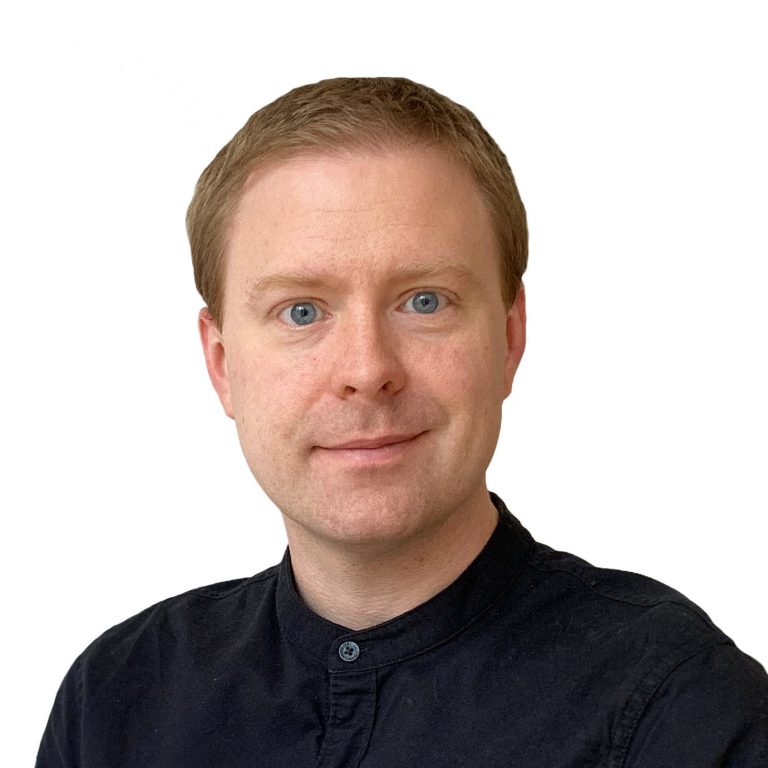
Bio: Emil Björnson (Fellow, IEEE) received the M.S. degree in engineering mathematics from Lund University, Sweden, in 2007, and the Ph.D. degree in telecommunications from the KTH Royal Institute of Technology, Sweden, in 2011. From 2012 to 2014, he was a Post-Doctoral Researcher with the Alcatel-Lucent Chair on Flexible Radio, SUPELEC, France. From 2014 to 2021, he held different professor positions at Linköping University, Sweden. He has been a Full Professor of Wireless Communication at KTH since 2020 and the Head of the Communication Systems division since 2024.
He has authored the textbooks Optimal Resource Allocation in Coordinated Multi-Cell Systems (2013), Massive MIMO Networks: Spectral, Energy, and Hardware Efficiency (2017), Foundations of User-Centric Cell-Free Massive MIMO (2021), and Introduction to Multiple Antenna Communications and Reconfigurable Surfaces (2024). He is dedicated to reproducible research and has published much simulation code. He researches multi-antenna communications, reconfigurable intelligent surfaces, radio resource allocation, machine learning for communications, and energy efficiency
Dr. Björnson has performed MIMO research since 2006, his papers have received more than 31000 citations, and he has filed more than 30 patent applications. He co-hosts the podcast Wireless Future and has a popular YouTube channel with the same name. He is a Wallenberg Academy Fellow, a Digital Futures Fellow, and an SSF Future Research Leader. He has received the 2014 Outstanding Young Researcher Award from IEEE ComSoc EMEA, the 2015 Ingvar Carlsson Award, the 2016 Best Ph.D. Award from EURASIP, the 2018 and 2022 IEEE Marconi Prize Paper Awards in Wireless Communications, the 2019 EURASIP Early Career Award, the 2019 IEEE Communications Society Fred W. Ellersick Prize, the 2019 IEEE Signal Processing Magazine Best Column Award, the 2020 Pierre-Simon Laplace Early Career Technical Achievement Award, the 2020 CTTC Early Achievement Award, the 2021 IEEE ComSoc RCC Early Achievement Award, the 2023 IEEE ComSoc Outstanding Paper Award, and the 2024 IEEE ComSoc Stephen O. Rice Prize. He also coauthored papers that received best paper awards at the conferences WCSP 2009, the IEEE CAMSAP 2011, the IEEE SAM 2014, the IEEE WCNC 2014, the IEEE ICC 2015, and WCSP 2017.